|
|
| Line 1: |
Line 1: |
| [[Kelpwings]], interchangeably [[Kelpwings|Kelplings]], are a dragon species created by [[Kelpwing]] in 2022.
| |
|
| |
|
| == Appearance ==
| |
|
| |
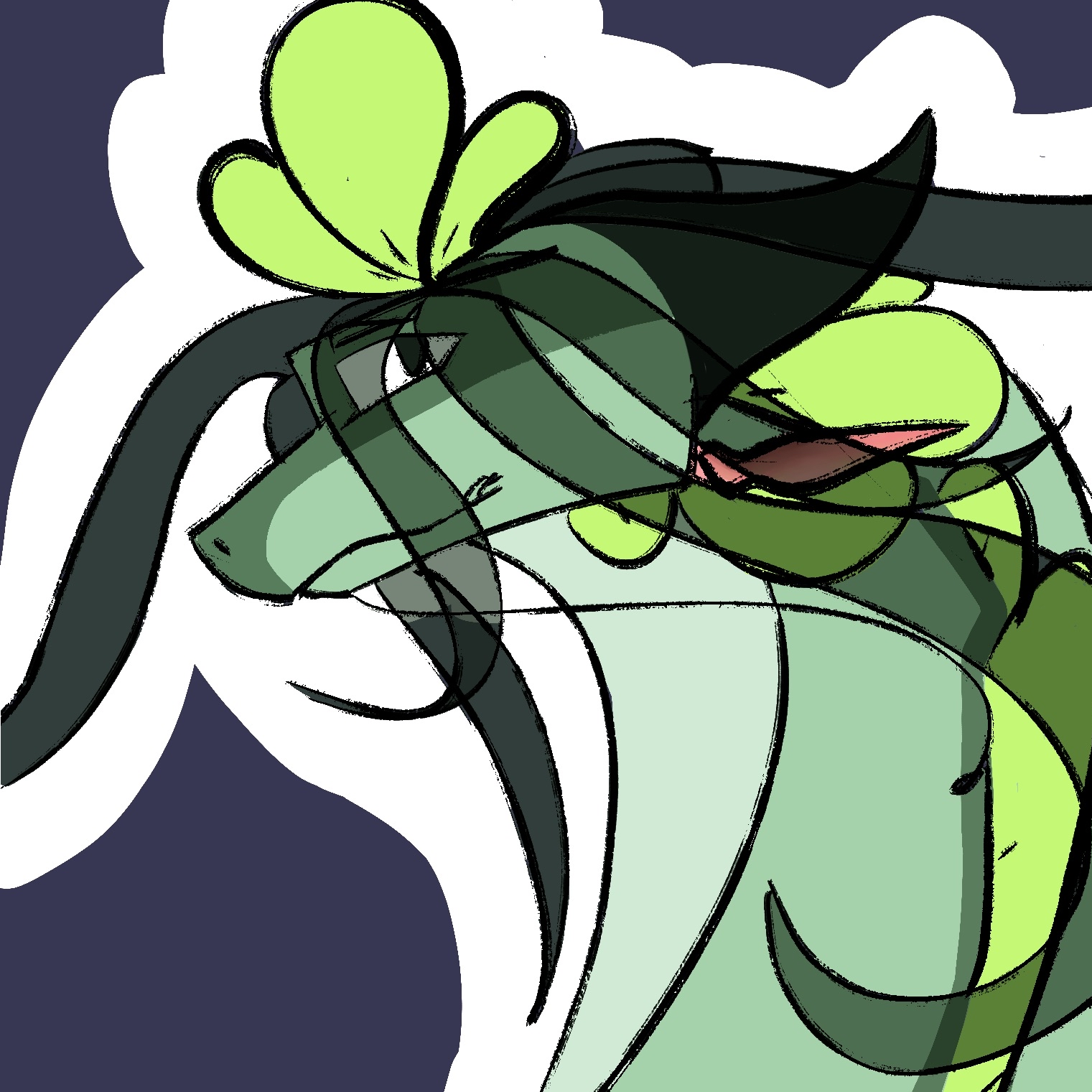
| [[Kelpwings|Kelplings]] are a species of dragon built to survive in both the air and sea. This comes with a major evolutionary trade-off, as they are not as strong in either environment as species specialised for one or the other.
| |
|
| |
| * They are typically light to dark green or yellow; rarely blue or purple.
| |
| * They have long, sleek bodies, containing huge muscle mass, giving them their powerful ability to survive in both the air and sea.
| |
| * They are highlighted by their yellow "buds" on their chest and back.
| |
| * The sizes of these buds vary from tiny to extremely large. Generally, each "bunch" has 3-9 buds total.
| |
| * Their heads are topped by long, sleek, flowing, semi-transparent, green hair, resembling kelp/seaplants.
| |
| * This hair grows and can be cut without any pain or difficulty. Their length also varies heavily depending on genetics.
| |
| * They have tail fins, providing their ability to generate huge waves.
| |
| * They do not have webbed claws/talons, though they are still powerful swimmers. Albeit not powerful enough to purely survive out at sea, but enough to hunt, survive, and traverse for an extended period of time.
| |
| * They have gills that are not visible, as they are hidden in the gaps/slits of the scales.
| |
|
| |
| There is a lot more variation in the species, mainly because of their evolutionary history. Kelpwings/Kelplings are said to be the result of multiple species of dragons interbreeding and evolving, resulting in a species that is highly adaptable to both air and sea environments. Since all the dragons
| |
|
| |
| == Survival ==
| |
|
| |
| A primary danger to [[Kelpwings|Kelplings]] is storms, as is the high possibility of windshear. It is not easy for [[Kelpwings|Kelplings]] to recover from windshear-induced mid-air instability. They are not safe in the sea either. Strong sudden rip currents can carry them far away almost without warning. These two especially affect [[hatchlings]] and younger [[fledglings]] who haven't had the chance to learn and adapt to such events yet.
| |
| <span id="physical-development"></span>
| |
| == Physical Development ==
| |
|
| |
| {| class="wikitable"
| |
| |-
| |
| ! Age tier
| |
| ! Approx. age
| |
| ! Average weight
| |
| ! Height
| |
| ! Wingspan
| |
| |-
| |
| | '''Hatchling'''
| |
| | 0-1 years
| |
| | 5-18 kg
| |
| | 0.35-0.65 m
| |
| | 1.2-2.2 m
| |
| |-
| |
| | '''Dragonet'''
| |
| | 1-5 years
| |
| | 18-50 kg
| |
| | 0.65-1.0 m
| |
| | 2.2-3.8 m
| |
| |-
| |
| | '''Fledgling'''
| |
| | 5-14 years
| |
| | 50-110 kg
| |
| | 1.0-1.4 m
| |
| | 3.8-5.8 m
| |
| |-
| |
| | '''Adolescent'''
| |
| | 14-25 years
| |
| | 110-260 kg
| |
| | 1.4-2.1 m
| |
| | 5.8-9.5 m
| |
| |-
| |
| | '''Adult'''
| |
| | 25-40 years
| |
| | 350-550 kg
| |
| | 2.3-3.1 m
| |
| | 14-20 m
| |
| |-
| |
| | '''Elder'''
| |
| | 40+ years
| |
| | 400-650 kg
| |
| | 2.4-3.2 m
| |
| | 14-21 m
| |
| |}
| |
|
| |
| Growth is accelerated during early development and progressively slows with age.
| |
|
| |
| <span id="flight-performance"></span>
| |
| == Flight Performance ==
| |
|
| |
| {| class="wikitable"
| |
| |-
| |
| ! Age tier
| |
| ! Comfortable speed
| |
| ! Max level speed
| |
| ! Max climb speed
| |
| ! Max dive speed
| |
| ! Typical flight endurance
| |
| |-
| |
| | '''Hatchling'''
| |
| | —
| |
| | 10-20 km/h
| |
| | 5-10 km/h
| |
| | 20-30 km/h
| |
| | 0-0.5 h
| |
| |-
| |
| | '''Dragonet'''
| |
| | 20-35 km/h
| |
| | 40-55 km/h
| |
| | 20-30 km/h
| |
| | 60-80 km/h
| |
| | 0.1-1 h
| |
| |-
| |
| | '''Fledgling'''
| |
| | 40-60 km/h
| |
| | 70-90 km/h
| |
| | 35-45 km/h
| |
| | 100-140 km/h
| |
| | 0.2-3 h
| |
| |-
| |
| | '''Adolescent'''
| |
| | 65-90 km/h
| |
| | 105-135 km/h
| |
| | 55-70 km/h
| |
| | 170-230 km/h
| |
| | 1.5-7 h
| |
| |-
| |
| | '''Adult'''
| |
| | ~130 km/h
| |
| | 150-175 km/h
| |
| | ~90 km/h
| |
| | ~320 km/h
| |
| | 5-17 h
| |
| |-
| |
| | '''Elder'''
| |
| | 110-125 km/h
| |
| | 140-165 km/h
| |
| | 75-90 km/h
| |
| | 280-310 km/h
| |
| | 3.5-9 h
| |
| |}
| |
|
| |
| <span id="flight-range"></span>
| |
| == Flight Range ==
| |
|
| |
| {| class="wikitable"
| |
| |-
| |
| ! Age tier
| |
| ! Typical nonstop glide
| |
| ! Excellent-condition glide
| |
| ! Typical nonstop powered flight
| |
| ! Typical flight distance
| |
| |-
| |
| | '''Hatchling'''
| |
| | 10-100 m
| |
| | ~300 m
| |
| | 0.1-1 km
| |
| | 0.1-1 km
| |
| |-
| |
| | '''Dragonet'''
| |
| | 0.5-2 km
| |
| | ~5 km
| |
| | 3-10 km
| |
| | 5-15 km
| |
| |-
| |
| | '''Fledgling'''
| |
| | 2-8 km
| |
| | ~15 km
| |
| | 15-50 km
| |
| | 30-70 km
| |
| |-
| |
| | '''Adolescent'''
| |
| | 8-30 km
| |
| | ~60 km
| |
| | 75-200 km
| |
| | 150-300 km
| |
| |-
| |
| | '''Adult'''
| |
| | 40-100 km
| |
| | 150-250+ km
| |
| | 500-900 km
| |
| | 700-1,000+ km
| |
| |-
| |
| | '''Elder'''
| |
| | 35-90 km
| |
| | ~200 km
| |
| | 400-750 km
| |
| | 600-900 km
| |
| |}
| |
|
| |
| Glide distance depends heavily on starting altitude, atmospheric conditions, thermals, and ridge lift.
| |
|
| |
| <span id="swimming"></span>
| |
| == Swimming ==
| |
|
| |
| {| class="wikitable"
| |
| |-
| |
| ! Age tier
| |
| ! Comfortable swim
| |
| ! Fast swim
| |
| ! Maximum sprint
| |
| |-
| |
| | '''Hatchling'''
| |
| | 2-5 km/h
| |
| | 6-8 km/h
| |
| | 10 km/h
| |
| |-
| |
| | '''Dragonet'''
| |
| | 8-15 km/h
| |
| | 18-25 km/h
| |
| | 30 km/h
| |
| |-
| |
| | '''Fledgling'''
| |
| | 15-25 km/h
| |
| | 30-40 km/h
| |
| | 45-50 km/h
| |
| |-
| |
| | '''Adolescent'''
| |
| | 25-38 km/h
| |
| | 40-50 km/h
| |
| | 55-65 km/h
| |
| |-
| |
| | '''Adult'''
| |
| | 35-50 km/h
| |
| | 50-60 km/h
| |
| | 70-80 km/h
| |
| |-
| |
| | '''Elder'''
| |
| | 30-45 km/h
| |
| | 45-55 km/h
| |
| | 65-75 km/h
| |
| |}
| |
|
| |
| <span id="flight-mechanics"></span>
| |
| == Flight Mechanics ==
| |
|
| |
| * Dragons can hover and remain airborne at very low or zero forward speed if they generate sufficient lift through active wingbeats.
| |
| * Hovering is substantially more energy-intensive than normal forward flight.
| |
| * Dragons do not have a strict conventional fixed-wing stall speed.
| |
| * The tailfin provides additional flight stability and is used for underwater propulsion.
| |
| * Smaller dragons are significantly more susceptible to windshear because of their lower mass, lower momentum, and developing muscular control.
| |
| * Fresh hatchlings are flightless and must be taught to fly.
| |
| * Late hatchlings can perform brief flights but have poor endurance and wind tolerance.
| |
| * Adolescents approach adult flight performance but have not yet reached adult endurance.
| |
| * Adults have the best combination of mass, wing area, power, and endurance.
| |
| * Elders generally have lower physical performance than adults but can compensate through superior flight experience and wind-reading ability.
| |
|
| |
| == Habitat ==
| |
|
| |
| The [[Kelpwings|Kelplings]] primarily live on land on the various islands scattered across the [[Thalora-Corvalia Cluster]] (also referred to as [[Thalora-Corvalia Cluster|Thalora]] or [[Thalora-Corvalia Cluster|Corvalia]]).
| |
|
| |
| == Communication ==
| |
|
| |
| They speak a language called [[Strand]]. There are various dialects of [[Strand]], varying by region. These dialects do not alter the writing; it only changes the pronunciation. Almost all [[Kelpwings|Kelplings]] can speak the unified version of [[Strand]].
| |
|
| |
| They generally have an Aussie-ish accent.
| |
|
| |
| == Way of Life ==
| |
|
| |
| [[Kelpwings|Kelplings]] live their lives built off of the sea. Ordinary [[Kelpwings|Kelplings]] live their lives in coves on the mountainside or in huts on the slopes. They commonly work jobs such as fishers, farmers, merchants, artisans, and soldiers.Strand"
| |